Philosophy
Child's Play
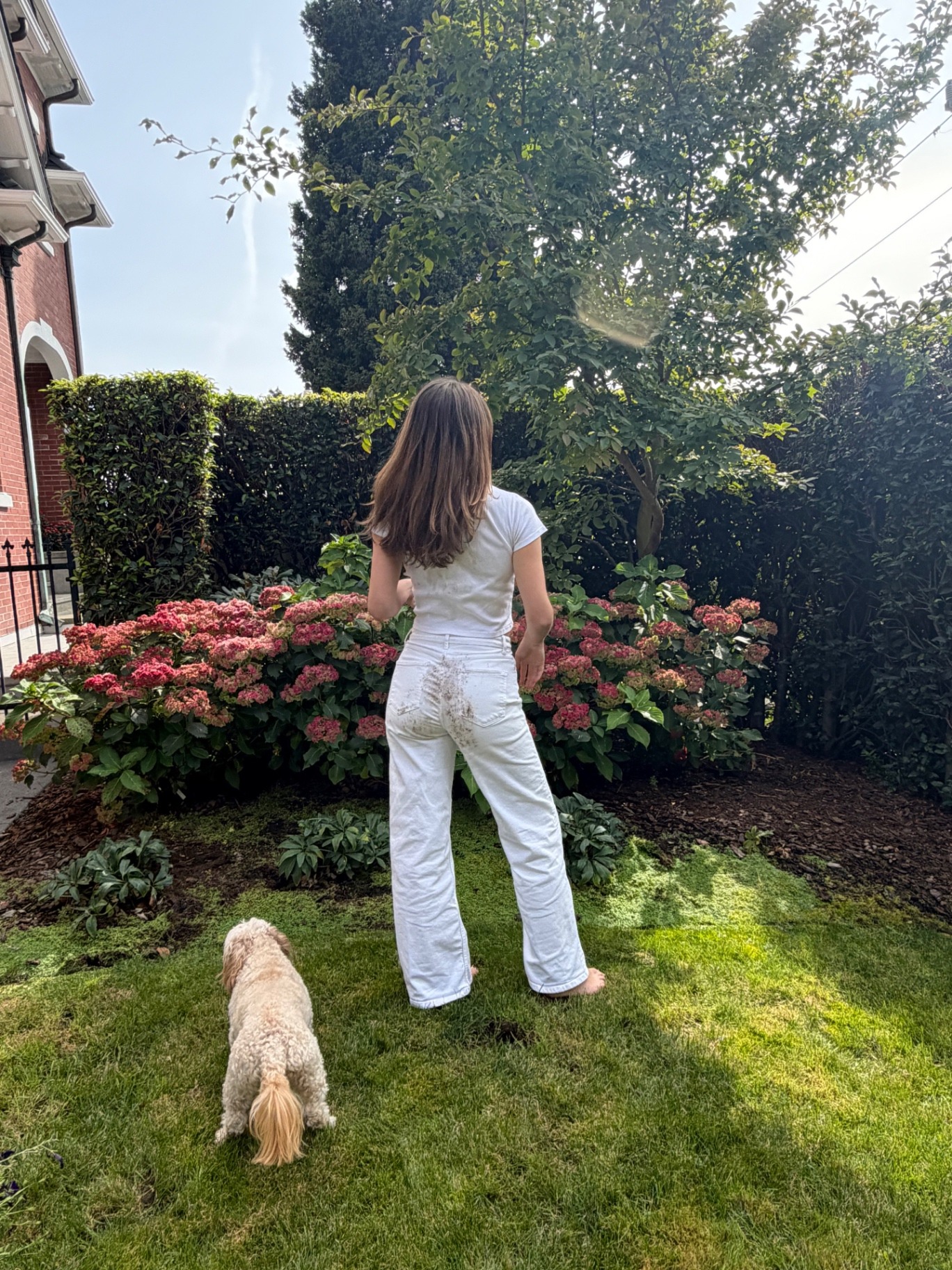
Are your jeans dirty?
The Image
01 / 03
The circle of life is a decorated pattern of going from diapers to diapers. You embellish it along the way, but it always ends where it begins.
On that circle we grow from grandchild to grandparent. It’s a transition from being taken care of to caring for yourself, then for others, and — if you’re lucky — back to being taken care of. The point at which we become a parent hits at different times. Some of us aren’t given a choice. The job arrives before we’re ready. Absent parents or present parents who never learned how. Kids raising themselves, and sometimes the adults around them too.
All we’re handed is the circle and told to connect the dots. Some of us with no instruction. Some with very specific guidelines for how it should be done. It often sounds like this is the way that life is.
Is it?
There is no right way to connect the dots. Your circle can look different from your parents’. Smaller or bigger — it’s entirely yours. If you don’t change how you connect them, you’ll keep seeing the same shape. You have to change the patterns that live inside you if you want the life you mean to live, and the parent you mean to be — with yourself, and with anyone you care for.
How do we know which pattern to live by? There is no manual. No test.
Yet there seems to be a binary right and wrong for everything else. A test to drive. A test to file and paint nails. You have to float for fifteen minutes before camp lets you in the deep end.
The role that sets the rest of history in motion? Nothing but our own judgment. Parenting is subjective. There is no single right way to raise someone.
Subjective does not mean unexamined. Be curious about your own existence. Why you do things the way that you do. Where your thoughts come from. What patterns you want to exist in the world after you are gone.
Examine yourself before you swim out where there is no shore and a current you cannot control. You have to know how to float before you help anyone else.
Once you’re in, there’s no swimming back. Being able to swim is a privilege. You’re capable. You’re here to continue existence.
I don’t care how you get in the water. Swan dive or pencil jump. But as you stand with ten toes off the board, about to freefall into the unknown, ask:
Will I give those I care for a belief system that is actually empowering?
Will I make my fears their fears? My insecurities something they believe about themselves? Is that really just how life is or am I choosing to experience it that way?
Will I be there when I am there, or sitting beside them while my mind is somewhere else?
Will I tell them they are beautiful and brilliant exactly as they are — and mean it? So when the world tells them to change this or that, they can smile and say, why would I mess with perfection?
Will I listen when I think they’re speaking nonsense? How do I know I don’t have the next Shakespeare on my hands, and simply haven’t taught them the language yet?
Will I call it a sacrifice when I rearrange my life around people who depend on me? Or a privilege — and mean it — when I say I get to care for life?
Will I teach them the world is something to be curious about, not scared of? Will I let the child in me follow the white rabbit down its hole with them and get my jeans dirty? Will I experience how precious life is?
There is no right answer. Only what feels true to you versus what you inherited from someone else’s grading system. You’re the one holding the pen.
After you’ve finished self-grading (I’m a kind professor that way — no wrong answers, only what feels true to the version of yourself and the world you want to live in), you walk the paper up to my far too big desk, glasses low on my nose.
“How’d you do?” I ask with a smirk. Trick question. I already know you passed. I sense the great parent in you.
“I am ready,” you say.
“Excellent.” I turn the page over. “You missed the question on the back. Don’t worry. Most people do.”
You flip it.
Are you a good parent to yourself?
Your child will watch everything. How you speak to yourself. How you treat your body. What you do when you think you’ve failed. What you tolerate. How you treat others. What you believe is possible. Whether you look like you’re enjoying your existence.
You can tell them they are beautiful.
What do you say in the mirror?
You can tell them to pursue their dreams.
Do you pursue yours?
You can tell them not to live for other people’s opinions.
Do you still treat others, and the world around you, with care?
You can tell them to share their toys.
Do you live like there will be more?
You can tell them to play.
Are your jeans even dirty?
They will take to your way of being long before they take your advice.
Be that version now. Don’t wait for children and then point to them as the reason you never became the person you hoped to be. I could have been or done that, but I had you. The gift of life is supposed to be light. That’s an incredibly heavy version to hand someone who never asked to be born.
Notice what feels like the patterns that exist in the version of yourself you want to be. There’s a voice in you worth listening to. That’s the one raising you.
Mine tells me to throw on my cleanest pair of white jeans and roll around in the mud. Oxiclean exists for a reason.